

Am I still a photographer?
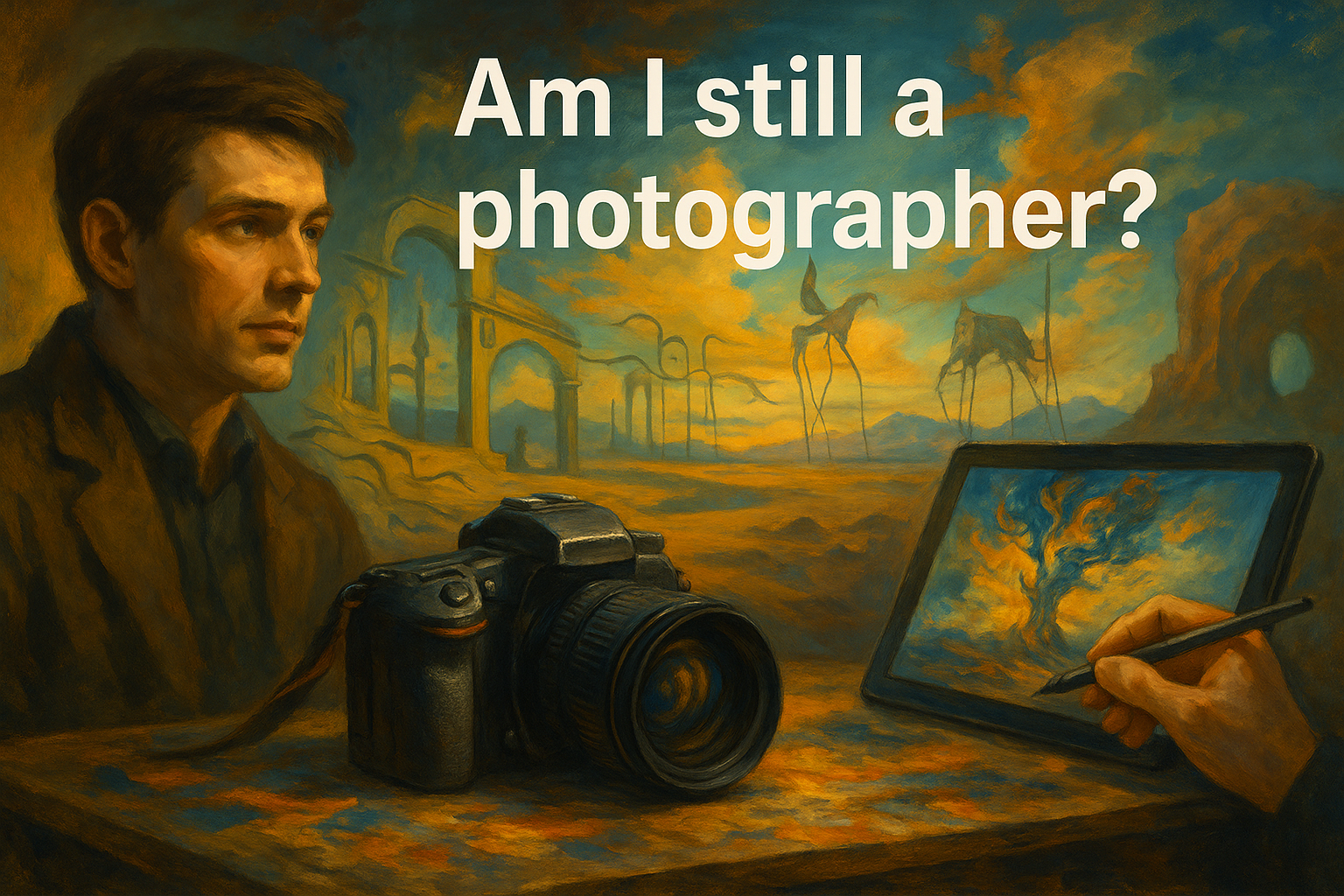
The artist embodies the post-photography era — where the lens, the algorithm, and the imagination merge to redefine the act of seeing.
After 20+ years, the camera is now the starting point of my work, not the finish. Generative AI and digital technologies have reshaped my process — photographs serve as raw material for a broader dialogue between image, data and imagination. Some will say photographer, others digital artist; I operate in the space between, where the work speaks for itself.
The artist at the threshold of change
Recently, I took part in a podcast about art and technology. As a visual and digital artist, I see digital technologies not as a threat, but as a multiplier of creativity. They amplify intuition, open new doors, and transform the way an artist inhabits his gesture.
Since the arrival of generative artificial intelligence, my own process has changed profoundly. Where photography once marked the end of my creative path, it has now become only the starting point.
And sometimes, I find myself wondering: am I still a photographer?
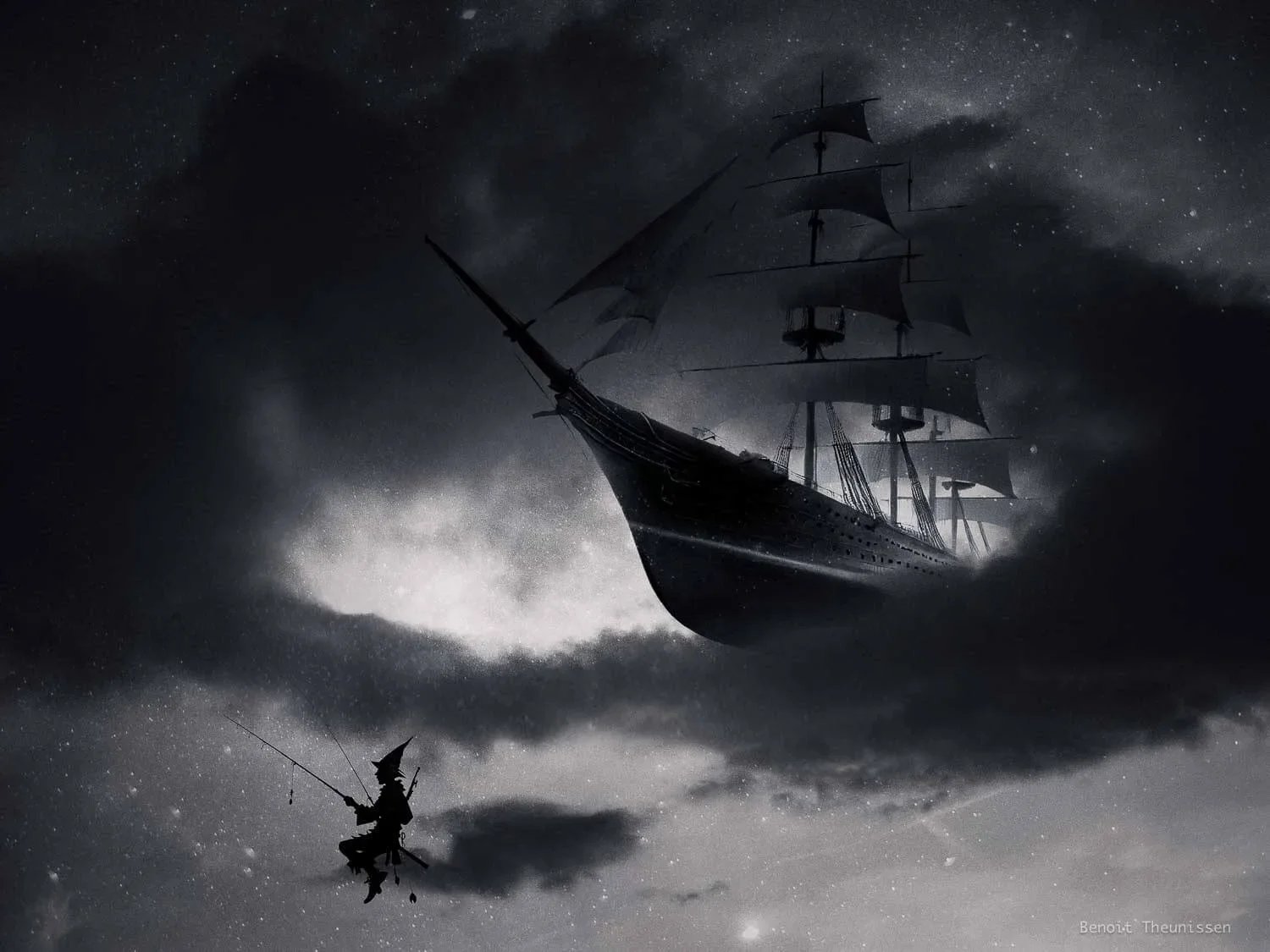
A distinctive frame infused with oneiric details; reality gives way to dream.
The Dream Vessel — Dreamlike Territories collection.
When the image becomes material
I have more than twenty years of photographic practice behind me. In the past, the finished image was the artwork itself. I edited it, refined it — it carried the entire meaning. Today, that image has become nothing more than raw material, something to be shaped and transformed.
Sometimes I use a raw photograph, enrich it with elements created by a generative AI, and rework it using digital painting tools. The result often resembles a surrealist painting, inspired by the great masters of dream and symbolism — such as Dalí, or Magritte.
At other times, I start from an entire series of images, which I assemble, distort, and recompose, before digitally painting over them. The outcome becomes more abstract, more organic, like a visual memory in motion.
And sometimes, I combine both approaches to create animated and immersive pieces: short videos or more complex visual compositions accompanied by original soundscapes, designed to extend the image into space.
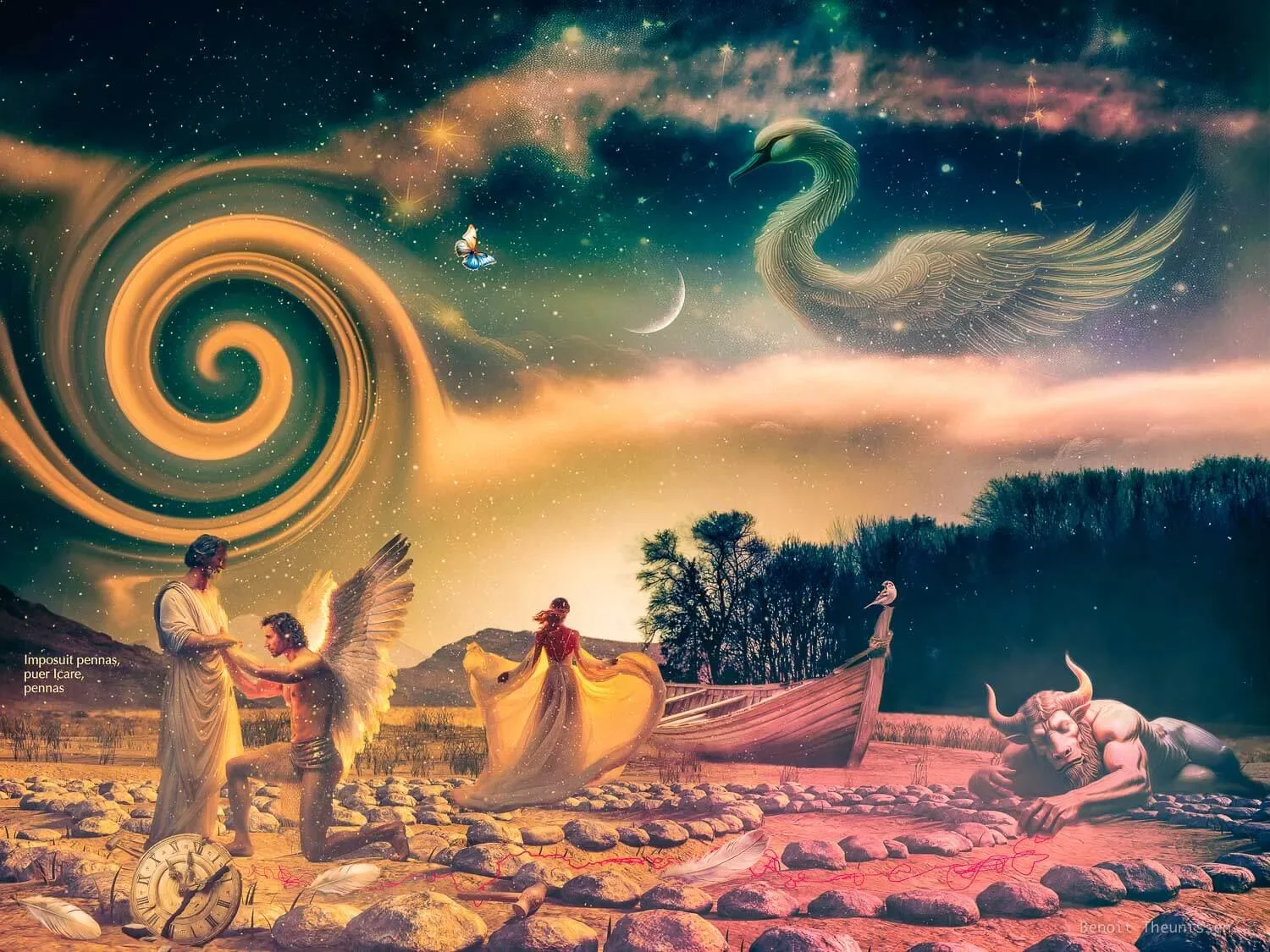
Digital technologies multiply creative possibilities, allowing a deeper exploration of mythical themes rich in symbols and archetypes.
Wings of Wax and Trust – Icarus collection.
Creative doubt and the question of meaning
As I prepare my next exhibition, (1)consciousness, focused on the role of technology in human perception, I find myself taking stock. Looking at my series, I can’t help but ask:
Am I still a photographer? Or have I become some kind of hybrid digital artist?
Technology has opened so many creative doors that I sometimes feel a sense of uncertainty — about my style, my approach, my technique. These questions don’t arise when I create. They appear later, when I assemble the works, when I build the scenography. That’s when I ask myself if all this makes sense, if the way I present myself to the world as an artist is still relevant, or if I should rewrite the narrative of my practice.
It’s normal, I suppose. An artist changes — his techniques, his inspirations, his language. That’s what keeps art alive. But if I no longer see myself as a photographer in the strict sense, then who am I? And what am I?
The word that no longer fits
For a long time, I defined myself as a surrealist photographer. That term captured the spirit of my work — dreamlike, symbolic, sometimes painted over. But today, it no longer fits.
It doesn’t encompass the abstract works, the ideograms, or the soundscapes I create. And besides, can one still call himself a photographer when he collaborates with artificial intelligence to shape his images?
Like many other disciplines, photography is being transformed by technology in ways we’ve never seen before. Even the digital revolution never pushed the photographic act this far.
Seeking meaning in a world saturated with images
My evolution also comes from a search for artistic meaning and value in a world overwhelmed by images. The endless flood of visual content has stripped photography of some of its depth. How can we prove the artistic value of an image in the age of social media?
To me, photography was dying — and with it, the last photographers, symbols of a bygone era. Then, almost by chance, I discovered the concept of post-photography.
Developed at the end of the twentieth century, it names the profound transformation of photography in the era of the digital, the network, the algorithm, and now artificial intelligence. Post-photography is not a style; it is an aesthetic condition — a cultural state in which the image is no longer simply captured, but constructed, recomposed, and reconfigured from data, archives, and fragments.
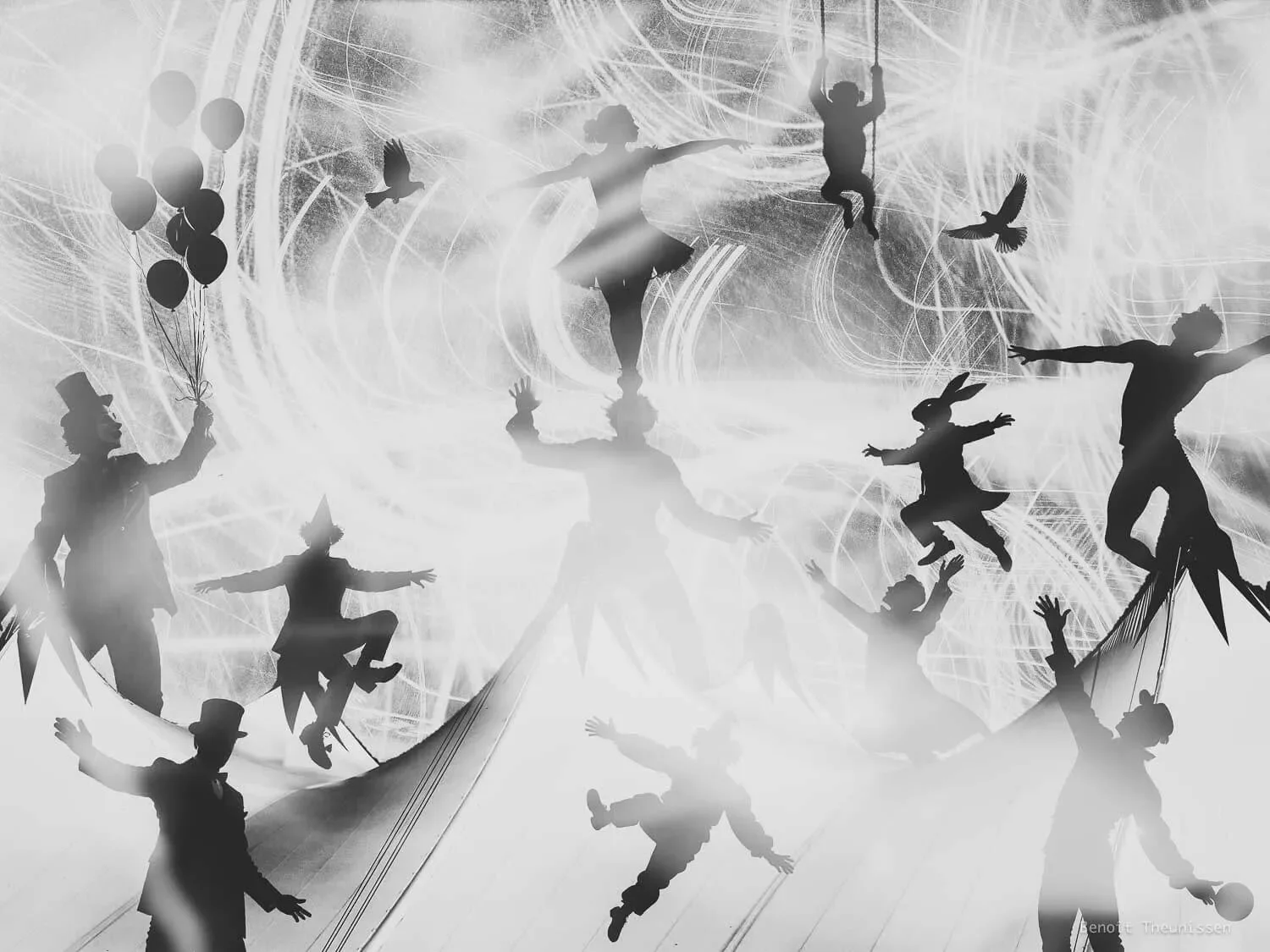
The use of overlays to enhance an image is well established in digital practice. Yet when layered onto a composition already shaped by AI-generated elements, the question arises: is this still photography, or something else entirely?
The Night Circus Dreamlike – Territories collection
My practice today
In my practice, a project rarely begins with a planned shoot. I photograph fragments of my daily life — lights, reflections, textures, shapes that catch my eye. I store these images in a personal archive, a living database.
Then, from time to time, I dive back into it. Certain images call to me — they become the seeds of new works. The creative process begins there, in a slow, iterative movement that can last for months.
Even though photography remains at the core of my practice, this new approach challenges traditional concepts: authenticity, origin, and the relationship between subject and image. We can play with these notions, but we shouldn’t ignore them. For my part, I choose to transgress them, as long as I stay true to my artistic intention. I place myself fully within fiction.
Between reality and fiction
More and more photographers now turn to AI to enhance portraits, create imagined settings or surreal compositions. What once took hours can now be done in a minute.
But the question remains: where is the line between reality and artistic creation?
For me, the answer is clear — I’m not anchoring my artwork in reality. I work in fiction, in dream, in transformation. Without post-photography, I might no longer be a visual artist today. It’s what allowed me to find meaning again in a world of hyper-abundance.
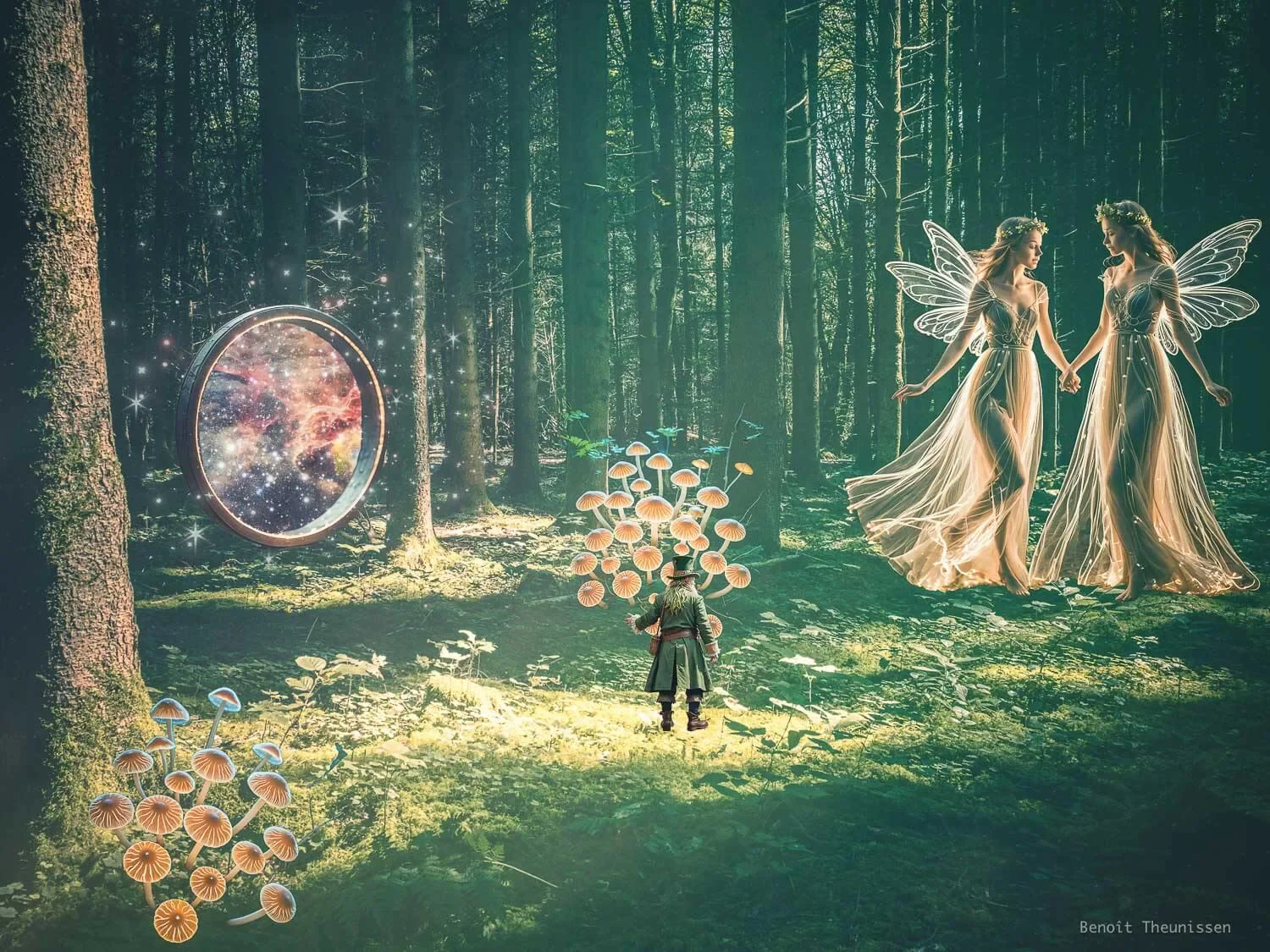
In the era of post-photography, images escape the bounds of time and space, drawing the viewer into a realm of pure fiction.
Portal to the Cosmos — Dreamlike Territories collection.
A new temporality
What I love about this approach is the way it dissolves boundaries — between reality and imagination, between past and future. There is no “before” or “after”. There is only the present of the gaze — that suspended moment when the viewer enters the space-time of the work.
I play with time: assembling fragments of the past with elements of the present and imagined futures. I blur the lines, but always with the intention of weaving meaning.
Photography as an art of renewal
With hindsight, I realise that photography has always been a phoenix. Each time it was thought to be dying, it was already being reborn.
From the ancient camera obscura to the daguerreotype, from silver film to digital, from smartphones to AI, photography has never stopped evolving. Every technical leap was seen as an ending, but in truth, each was a new beginning.
Today, in the age of post-photography, I believe more than ever that photography is not dead. It has become timeless — an art of transformation, resilience, and renewed vision.
To be an artist today is to accept transformation. It’s to understand that the image is no longer merely a reflection of the world, but a living language, constantly reinventing itself.